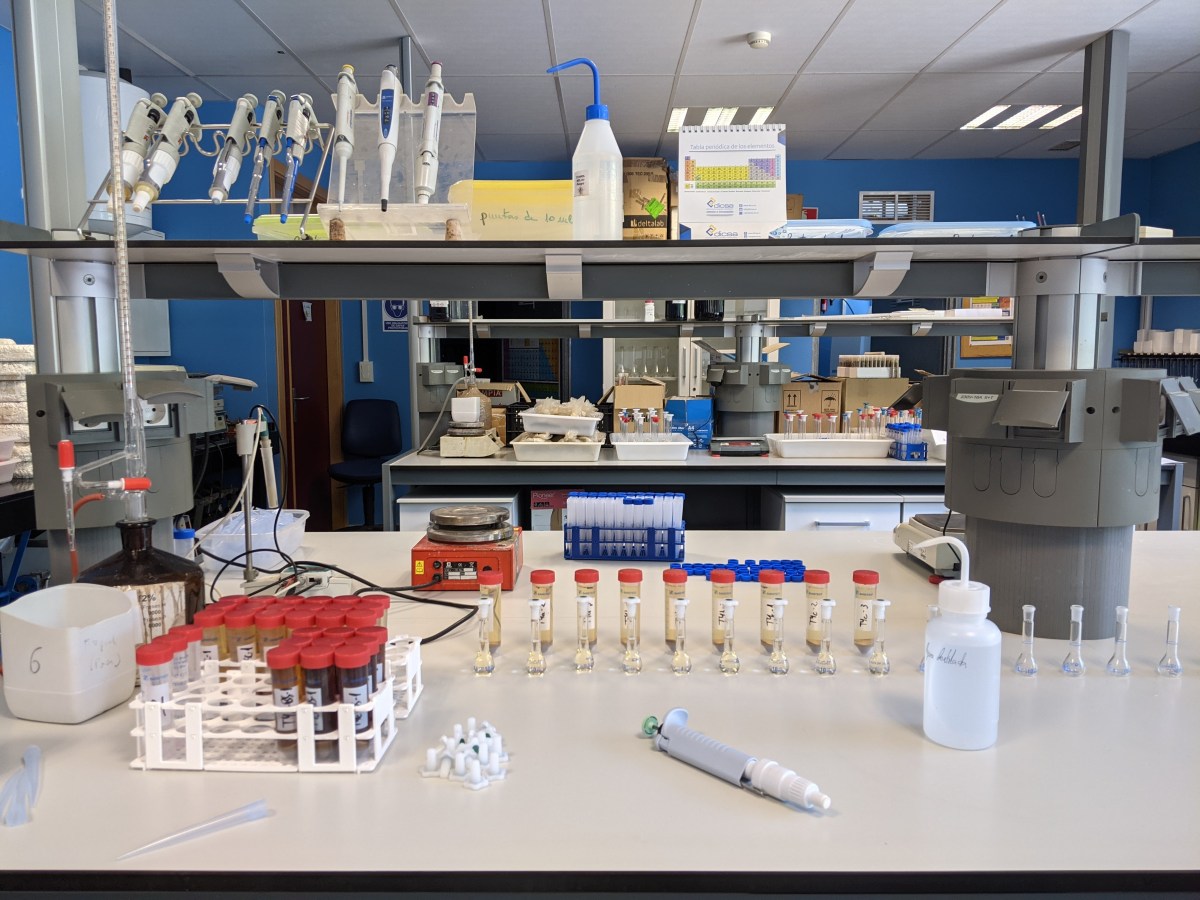
“A green solution for the rehabilitation of lands: the case of Lablab purpureus (L.) Sweet grown in Technosols” in Plants and “Remediation potential of mining, agro-industrial, and urban wastes against acid mine drainage” in Scientific Reports.

ABSTRACT
Reclamation of abandoned mining areas can be a potentially viable solution to tackle three major problems: waste mismanagement, environmental contamination, and growing food demand. This study aims to evaluate the rehabilitation of mining areas into agricultural production areas using integrated biotechnology and combining Technosols with a multipurpose (forage, food, ornamental and medicinal) drought-resistant legume, the Lablab purpureus (L.) Sweet. Two Technosols were prepared by combining gossan waste (GW) from an abandoned mining area with a mix of low-cost organic and inorganic materials. Before and after plant growth, several parameters were analysed, such as soil physicochemical characteristics, nutritional status, bioavailable concentrations of potentially hazardous elements (PHE), soil enzymatic activities, and development and accumulation of PHE in Lablab, among others. Both Technosols improved physicochemical conditions, nutritional status and microbiological activity, and reduced the bioavailability of most PHE (except As) of GW. Lablab thrived in both Technosols and showed PHE accumulation mainly in the roots, with PHE concentrations in the shoots that are safe for cattle and sheep consumption. Thus, this is a potential plant that, in conjunction with Technosols, constitutes a potential integrated biotechnology approach for the conversion of marginal lands, such as abandoned mining areas, into food-production areas.
The article can be found at the following link:
ABSTRACT
Acid mine drainage (AMD) poses serious consequences for human health and ecosystems. Novel strategies for its treatment involve the use of wastes. This paper evaluates the remediation potential of wastes from urban, mining and agro-industrial activities to address acidity and high concentrations of potentially toxic elements (PTE) in AMD. Samples of these waste products were spiked with an artificially prepared AMD, then pH, electrical conductivity (EC), and PTE concentrations in the leachates were measured. The artificial AMD obtained through oxidation of Aznalcóllar’s tailing showed an ultra-acid character (pH − 2.89 ± 0.03) and extreme high electrical conductivity (EC − 3.76 ± 0.14 dS m−1). Moreover, most PTE were above maximum regulatory levels in natural and irrigation waters. Wastes studied had a very high acid neutralising capacity, as well as a strong capacity to immobilise PTE. Inorganic wastes, together with vermicompost from pruning, reduced most PTE concentrations by over 95%, while organic wastes retained between 50 and 95%. Thus, a wide range of urban, mining, and agro-industrial wastes have a high potential to be used in the treatment of AMD. This study provides valuable input for the development of new eco-technologies based on the combination of wastes (eg. Technosols, permeable reactive barriers) to remediate degraded environments.
The article can be found at the following link:
 Antonio Aguilar-Garrido